Can Art be Objective?
Art Critic, Clement Greenburg’s essay “Modernist Painting” examines Modern art’s
objective position. He asserts that
Modernist painting is valuable based on the work’s ability to stay true to
itself (Greenburg). There is no patron to appease, or religious
authority to impress. There is only
artist, paint, canvas, and freedom of expression.
Can something as reflexive as art ever be truly
objective?
Modernist painting is objective from in and of itself,
however it creates a new subjectivity with the artist controlling the subject
matter and not just the method of interpretation.
Marshall McLuhan’s essay “The Medium is the Message” gives
fascinating insight into the importance of acts of media aiding into the
progress of society and human empowerment. He writes, “For the
"message" of any medium or technology is the change of scale or pace
or pattern that it introduces into human affairs (McLuhan, The Medium is the Message).”
If the medium is the message, the artist is the
transmitter.
Take a look at the following Jackson Pollock quote found a on the
Museum of Modern Art website:“When I am in my painting, I’m not aware of what I’m doing. It is only after a sort of ‘get acquainted’ period that I see what I have been about. I have no fear of making changes, destroying the image, etc., because the painting has a life of its own. I try to let it come through. It is only when I lose contact with the painting that the result is a mess. Otherwise there is pure harmony, an easy give and take, and the painting comes out well, (Musuem of Modern Art )."
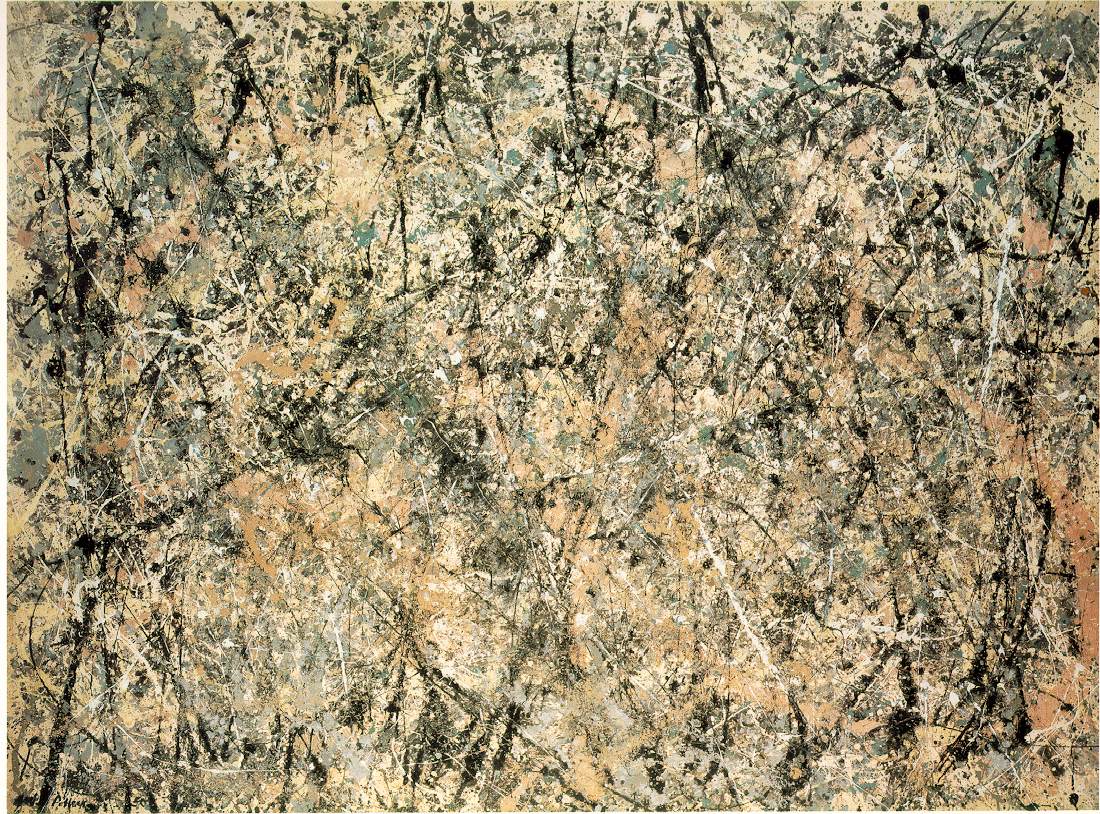 |
| Lavender Mist: Number 1, 1950 (Pollock) |
The idea of being "in" the painting and it
"taking on a life of its own" emphasizes the work as on objective
entity. Pollock's own words convey his
role in the creative process, as one of a kind of conduit surrendering his own
subjective will to this entity.
In lecture, McLuhan describes the literate mind
as being more objective due to its ability to make quick, yet informed
decisions (McLuhan). Like the
development of perspective, or Impressionism, each movement in art marked a new
kind of literacy inside of the act of making art works. The literacy in
Modernist art seeks to make decisive statements about art.
This idea of decisive objectivity in art is juxtaposed with
the inherent fluidity of art itself. The ability to adapt art to the purposes
or interests of the practitioner, extend to the audience's ability to receive
new approaches to traditional forms. Without this reception, the new ideas
never grow.
Modernist Art is the result of the changes of cultural perspective of painting. As Greenburg points out, Realism and Naturalism were central to the truth and value of the work, and served as vehicle to perpetuate the social and religious ideals (Greenburg). Art continues to perform this function within our contemporary society but its message can be more fluid. New social messages are being transmitted through the medium of painting.
Modernist Art is the result of the changes of cultural perspective of painting. As Greenburg points out, Realism and Naturalism were central to the truth and value of the work, and served as vehicle to perpetuate the social and religious ideals (Greenburg). Art continues to perform this function within our contemporary society but its message can be more fluid. New social messages are being transmitted through the medium of painting.
With elitism no longer
limiting the practice of painting, painting begins to mean many things to more
people. The message of the medium changed.
I think this was important to the development of Modernist Art. Its
reception depended on nurturing the seeds of social inclusion, accessibility,
and literacy.
Renaissance to Modern Portraiture
_-_The_Girl_With_The_Pearl_Earring_(1665).jpg) |
| Girl with the Pearl Earring by Johannes Vermeer, 1665 Realism in Renaissance Art |
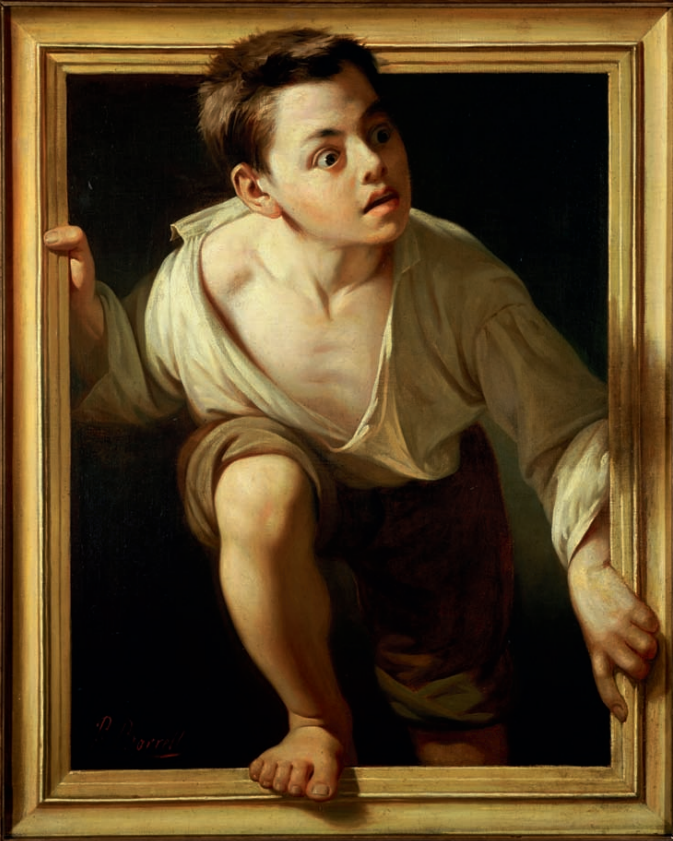 |
| Escaping Criticism by Pere Borrell del Caso, 1874 The burgeoning concept of breaking boundaries in art is clear in both title and the subject of this painting. |
 |
| Self-Portrait by
Pierre-Auguste Renoir, 1899 The move away from the sculptural towards flatness. |
.jpg "Self-Portrait in a Striped T-Shirt by Henir Matisse, 1906") |
| Self-Portrait in a Striped T-Shirt by Henri Matisse, 1906 The elements of colour line and perspective are deconstructed to emphasize the flatness of the canvas |
Works Cited
Greenburg, Clement.
"Greenburg: Modernism." 1960. University of Chicago.
23 September 2013 <http://www.sharecom.ca/greenberg/modernism.html>.
McLuhan, Marshall. "Marshall McLuhan Full lecture: The Medium is the
Message." ABC National Radio: Monday Conference. Vol. 1.
Comp. mywebcowtube. YouTube, 27 June 1977.
Pollock, Jackson. Lavender Mist: Number 1. National
Gallery of Art. WebMuseum, Paris. Washington,, 2002.

No comments:
Post a Comment